
How to maintain a micro gear motor?
How to maintain a micro gear motor A micro gear motor is a power transmission mechanism that uses a gear reducer to reduce the motor's speed to the desired level while obtaining a larger torque. Currently, reducers are widely used in mechanisms for transmitting power and motion.
Release time:
2022-10-19 11:17
Micro gear motorHow to maintain
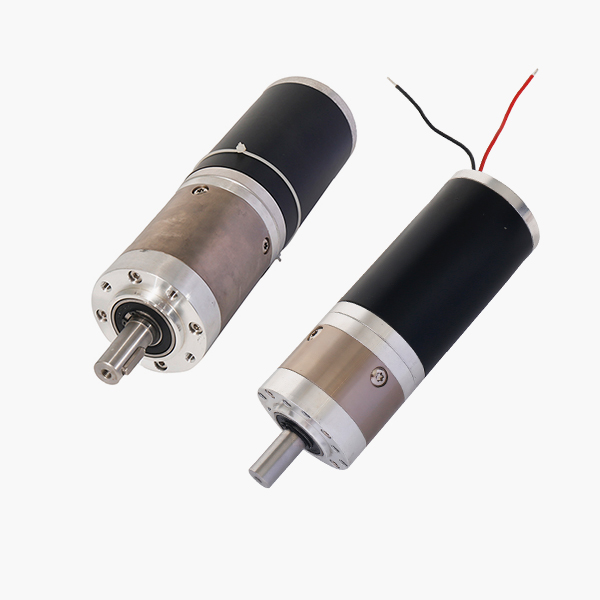
Micro gear motorIt is a power transmission mechanism that uses a gear reducer to reduce the motor's speed to the required speed and obtain a larger torque. Reducers have a wide range of applications in the current mechanisms used for power and motion transmission. They can be seen in various mechanical transmission systems, from heavy machinery and tools used in ships, cars, locomotives, and construction, to processing machinery and tools used in the mechanical industry, as well as automation production equipment, and common household appliances and clocks in daily life. Its applications can be seen from high-power transmission work to small load, precise angle transmission, and in industrial applications, reducers have the function of reducing speed and increasing torque. Therefore, they are widely used in speed and torque conversion equipment.
To ensure the assembly accuracy of the micro gear motor, the motor does not need to be started during installation, and the sealing glue should not be damaged. Open the oil cover or use kerosene (diesel) to clean the rust-proof grease on the gear surface for inspection. An elastic coupling can also be used to connect the gear shaft or other non-rigid couplings between the micro gear motor and the connecting parts such as the motor or main engine. The installation of the micro gear motor should be stable and firm, and the base adjustment shims must be solid (steel shims should be used). The coaxiality deviation between the coupling should not exceed the allowable value of the coupling used. Check whether the bolts on each sealing surface of the container are loose. If they are loose, tighten them again.
Usage and maintenanceMicro gear motorBefore formal use, a load test must be conducted. Before the load test, lubricating oil should be added according to the oil level position, and the output shaft should be rotated by hand to ensure it rotates flexibly. It must run for two hours without any abnormal noise. During the load test, the load should be gradually increased to full load (if conditions permit, it should be at 25%, 50%, 75%, andfullload) in four stages, with each stage running for no less than 2 hours, and it should be stable without impact vibration and oil. After draining the lubricating oil from the machine, it should be confirmed that there are no faults or used after filtering the oil with a 200 mesh filter. If there are any abnormal conditions during the test run, the cause should be identified and eliminated, and the manufacturer should be notified immediately. The micro gear motor should be checked once every six months. After that, the gear surface should be regularly (weekly) checked for pitting, wear, adhesion, and other defects. If the defect area along the tooth length and tooth height direction exceeds 20%, the gear pair should be replaced. Gears use two forms of lubrication: oil pool lubrication and circulating lubrication, and the lubricating oil should be selected according to the equipment manual. Soft tooth surface and medium-hard tooth surface motors use N100 ~ 150. Hard tooth surface gear motors use N220 ~ 320. The lubricating oil should be regularly checked and replaced. For newly installed speed-regulating motors, the oil must be replaced after running for 10-15 days. After that, the oil quality should be checked regularly (every 2-3 months). If it does not meet the requirements, it should be replaced immediately. Generally, the engine oil should be replaced at least once every six months. When checking the quality of the lubricating oil, if any of the following situations occur, the lubricating oil must be replaced in a timely manner:
The daily maintenance of the micro gear motor mainly involves checking for oil leaks, timely checking the liquid level in the box, ensuring good lubrication, checking whether the screws are tight and intact, regularly checking the temperature of the equipment, using a guide wire to bite into the meshing position of the gear, and measuring the wear of the teeth.
Related News
What is the difference between brushless reduction motors and brushed reduction motors?
Brushless DC Motor (BLDC) and Brushed DC Motor have some significant differences in structure, working principle, performance, and other aspects. Here are their main differences:
How to assess the noise level and vibration characteristics of a screw-type window opener motor?
When selecting a screw-type window opener motor, its noise level and vibration characteristics are two crucial factors that directly affect the user experience and the stability of the equipment. So, how should we evaluate these two aspects?
In the field of construction, screw-type window openers are important devices for achieving automated window opening and closing, and their performance and stability are crucial. Especially in some harsh environmental conditions, such as high humidity and dusty places, the protection level of the motor becomes a key factor in ensuring the normal operation of the window opener.
What are the common faults of screw-type window opener motors?
The screw-type window opener motor may experience some common faults during long-term use. Below are some typical fault phenomena and their possible causes.
Introduction to Micro DC Gear Motors
Introduction to Micro DC Gear Motors Micro DC gear motors are a miniaturized motor system, typically consisting of a DC motor and a gearbox. Here are some related introductions to micro DC gear motors: DC Motor Section: Working Principle: The DC motor generates current by moving a conductive coil in a magnetic field, thus producing electromagnetic force to drive the motor's rotation. Structure: Micro DC motors usually adopt a separate structure, including an armature (rotating part) and an electromagnet (stator part). Types: Common types of DC motors include brushed DC motors and brushless DC motors. Brushed DC motors use brushes to connect to the armature, while brushless DC motors control current through an electronic speed controller, eliminating the need for brushes. Gearbox Section: Function: The gearbox is used to slow down the motor's output speed while increasing torque. This is crucial for applications requiring higher torque and lower speeds, such as robotic arms and camera gimbals. Structure: Gearboxes typically consist of gears that achieve the reduction ratio through different gear combinations. The reduction ratio is the ratio of input speed to output speed. Types: Common types of gearboxes include planetary gears, worm gears, and helical gears. Different types of gearboxes are suitable for different application scenarios. Applications: Micro DC gear motors are widely used in various fields, including consumer electronics (such as cameras and printers), medical devices, robotics, and automotive electronics. In these applications, micro DC gear motors are typically used to control precise movements, provide sufficient torque, and achieve efficient performance in limited spaces. Control and Drive: Micro DC gear motors usually require corresponding electronic speed controllers or controllers to precisely control rotation speed and direction. The control system can adjust the motor's output according to application needs, achieving precise position control and speed regulation. Performance Parameters: The performance parameters of micro DC gear motors include rated voltage, rated speed, rated torque, efficiency, etc. These parameters are crucial for selecting and designing motor systems. In summary, micro DC gear motors have been widely applied under the trends of miniaturization, precision, and efficiency, providing reliable driving force for many electric devices and systems.
Contact Information
Service Hotline:+86 0769-3901 7383
Mobile Phone: +86 180 0260 1103
Email: sunweihong@silentgear.cn
Factory Address: No. 15, Century Road, Baihao Industrial Zone, Houjie Town, Dongguan City, Guangdong Province
Quick Navigation
Online message
Contact Us

COPYRIGHT 2024 Dongguan Silent Industrial Co., Ltd.