
Screw-type window opener motor: Provides stronger support for its application in various industries.
With the continuous development of technology, screw-type window opener motors have been widely used in many fields. As an important mechanical component, the main function of the screw-type window opener motor is to drive the movement of the window opener, thereby achieving the opening and closing of windows. This article will detail the performance, applications, and optimization methods of screw-type window opener motors.
Release time:
2023-09-26 11:16
With the continuous development of technology,Screw-type window opener motorit has been widely used in many fields. As an important mechanical component, the main function of the screw-type window opener motor is to drive the movement of the window opener, thereby achieving the opening and closing of windows. This article will detailScrew-type window opener motorthe performance, applications, and optimization methods.
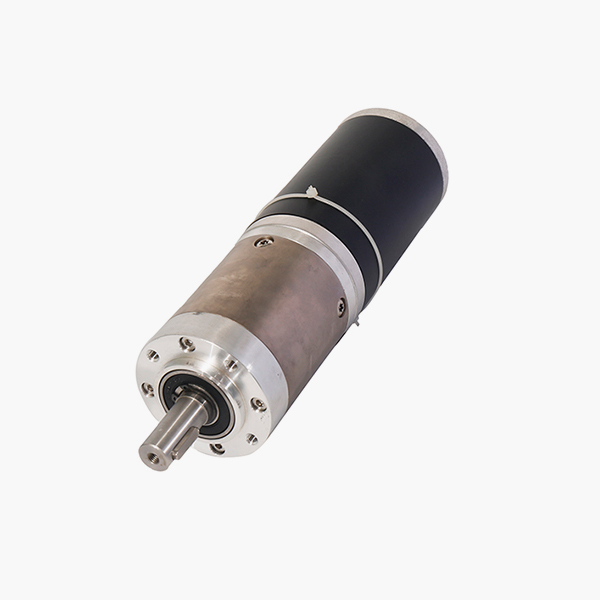
1. Performance of the screw-type window opener motor
Efficiency:Screw-type window opener motorIt has efficiency and can effectively convert electrical energy into mechanical energy, achieving rapid opening and closing of windows.
Reliability: Due to the simple structure of the screw-type window opener motor, it rarely fails during use, demonstrating high reliability.
Long lifespan: The screw-type window opener motor has a long service life and can maintain stable performance over long-term use.
Energy-saving and environmentally friendly: The screw-type window opener motor features energy-saving and environmentally friendly characteristics, effectively reducing energy consumption and environmental pollution.
2. Applications of the screw-type window opener motor
Construction industry: In the construction industry, screw-type window opener motors are widely used for the opening and closing of windows in various buildings.
Automotive industry: In the automotive industry, screw-type window opener motors can be used for the opening and closing of various car windows.
Aerospace: In the aerospace field, screw-type window opener motors can be used for the opening and closing of various aircraft windows.
Automated production lines: In automated production lines, screw-type window opener motors can be used to drive various automated equipment.
3. Optimization of the screw-type window opener motor
To improve the performance and reliability of the screw-type window opener motor, the following optimization measures can be taken:
Material optimization: Use high-strength, lightweight materials to manufacture the screw and motor housing to enhance the mechanical performance and service life of the motor.
Structural design optimization: Optimize the design of the motor structure to improve the motor's heat dissipation performance and mechanical strength, thereby reducing the failure rate.
Manufacturing process optimization: Use advanced manufacturing processes, such as CNC machining and 3D printing technology, to improve the machining accuracy and production efficiency of the motor.
Energy consumption optimization: By adopting low-energy design and selecting efficient motors, energy consumption can be reduced, and energy utilization efficiency can be improved.
Control optimization: Use intelligent control systems to achieve precise control of the motor, improving the motor's operating efficiency and response speed.
Maintenance optimization: Establish a comprehensive maintenance system, regularly inspect and maintain the motor to ensure stable operation and extend its service life.
4. Conclusion
As an important mechanical component, the screw-type window opener motor has been widely used in various fields. To improve its performance and reliability, a series of optimization measures should be taken, including material optimization, structural design optimization, manufacturing process optimization, energy consumption optimization, control optimization, and maintenance optimization. By implementing these optimization measures, the performance and reliability of the screw-type window opener motor can be further enhanced, providing stronger support for its applications in various industries.
Related News
What is the difference between brushless reduction motors and brushed reduction motors?
Brushless DC Motor (BLDC) and Brushed DC Motor have some significant differences in structure, working principle, performance, and other aspects. Here are their main differences:
How to assess the noise level and vibration characteristics of a screw-type window opener motor?
When selecting a screw-type window opener motor, its noise level and vibration characteristics are two crucial factors that directly affect the user experience and the stability of the equipment. So, how should we evaluate these two aspects?
In the field of construction, screw-type window openers are important devices for achieving automated window opening and closing, and their performance and stability are crucial. Especially in some harsh environmental conditions, such as high humidity and dusty places, the protection level of the motor becomes a key factor in ensuring the normal operation of the window opener.
What are the common faults of screw-type window opener motors?
The screw-type window opener motor may experience some common faults during long-term use. Below are some typical fault phenomena and their possible causes.
Introduction to Micro DC Gear Motors
Introduction to Micro DC Gear Motors Micro DC gear motors are a miniaturized motor system, typically consisting of a DC motor and a gearbox. Here are some related introductions to micro DC gear motors: DC Motor Section: Working Principle: The DC motor generates current by moving a conductive coil in a magnetic field, thus producing electromagnetic force to drive the motor's rotation. Structure: Micro DC motors usually adopt a separate structure, including an armature (rotating part) and an electromagnet (stator part). Types: Common types of DC motors include brushed DC motors and brushless DC motors. Brushed DC motors use brushes to connect to the armature, while brushless DC motors control current through an electronic speed controller, eliminating the need for brushes. Gearbox Section: Function: The gearbox is used to slow down the motor's output speed while increasing torque. This is crucial for applications requiring higher torque and lower speeds, such as robotic arms and camera gimbals. Structure: Gearboxes typically consist of gears that achieve the reduction ratio through different gear combinations. The reduction ratio is the ratio of input speed to output speed. Types: Common types of gearboxes include planetary gears, worm gears, and helical gears. Different types of gearboxes are suitable for different application scenarios. Applications: Micro DC gear motors are widely used in various fields, including consumer electronics (such as cameras and printers), medical devices, robotics, and automotive electronics. In these applications, micro DC gear motors are typically used to control precise movements, provide sufficient torque, and achieve efficient performance in limited spaces. Control and Drive: Micro DC gear motors usually require corresponding electronic speed controllers or controllers to precisely control rotation speed and direction. The control system can adjust the motor's output according to application needs, achieving precise position control and speed regulation. Performance Parameters: The performance parameters of micro DC gear motors include rated voltage, rated speed, rated torque, efficiency, etc. These parameters are crucial for selecting and designing motor systems. In summary, micro DC gear motors have been widely applied under the trends of miniaturization, precision, and efficiency, providing reliable driving force for many electric devices and systems.
Contact Information
Service Hotline:+86 0769-3901 7383
Mobile Phone: +86 180 0260 1103
Email: sunweihong@silentgear.cn
Factory Address: No. 15, Century Road, Baihao Industrial Zone, Houjie Town, Dongguan City, Guangdong Province
Quick Navigation
Online message
Contact Us

COPYRIGHT 2024 Dongguan Silent Industrial Co., Ltd.